
Nursing home in Tunisia
A modern approach to care for elderly people
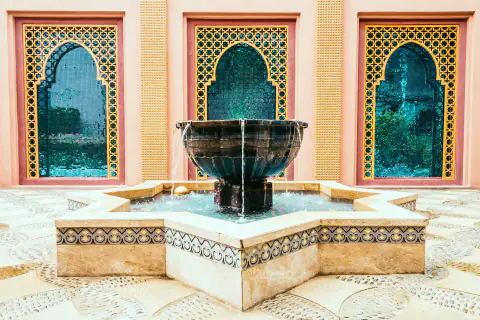
Looking for a nursing home in Tunisia for yourself or a loved one? EHPAD Tunisie is the reference network of medicalised care homes in 7 cities across the country — Tunis, Sfax, Sousse, Hammamet, Monastir, Djerba and Bizerte. Our residences combine round-the-clock care, a mild Mediterranean climate and costs 50 to 70% lower than equivalent UK or US rates.
There are several types of senior accommodation in Tunisia: medicalised nursing homes, autonomy residences, service residences and supported housing. Each formula adapts to the person’s level of independence and the family budget.
Medicalised nursing homes are designed for people who require constant medical care and assistance with daily activities. Autonomy residences are for people who still have a degree of independence but need help with daily tasks such as cooking and cleaning. Service residences are for people who need services such as meals, cleaning and laundry, while still being able to live independently in their own apartment. Supported housing provides adapted accommodation for elderly people who want to live independently with some support for daily tasks.
Why a nursing home in Tunisia rather than the UK or US?
Cost is the decisive factor for many families. A care home place in the UK typically runs £4,500 to £8,000 per month (and $6,000–$10,000 in the US), with nursing care at the upper end. An equivalent place in a nursing home in Tunisia costs £1,000 to £2,400 per month — often with a larger room, more staff per resident and more personalised attention.
Three further advantages are hard to match at home:
- The climate: mild winters (rarely below 12°C on the coast) and over 300 days of sunshine in several regions — a real relief for rheumatism, arthritis and seasonal low mood.
- Accessibility: direct flights from London and other European hubs to Tunis, Enfidha, Monastir or Djerba in around 2h30–3h00, so family visits stay easy.
- The culture of care: many Tunisian doctors trained in Europe, and respect for elderly people is deeply rooted in Tunisian culture.
No UK or US assessment is required for admission — each residence carries out its own geriatric assessment. For English-speaking seniors we also have a dedicated guide: Nursing home in Tunisia for English speakers.
Our nursing homes by city
Our network covers the country’s 7 main cities, each with its own character:
- Nursing home in Tunis — the capital: the country’s best clinics, international airport, urban life
- Nursing home in Hammamet — the most popular seaside resort, with a large international community
- Nursing home in Sousse — lively coastal city with a major university hospital
- Nursing home in Monastir — quiet coastal town, international airport 10 minutes away
- Nursing home in Djerba — the sunshine island: 300 sunny days a year
- Nursing home in Sfax — the second-largest city, with excellent medical infrastructure
- Nursing home in Bizerte — authentic harbour town in the green north
What is a nursing home in Tunisia?
The nursing homes we offer in Tunisia are top-tier long-term care establishments, designed to provide a secure, comfortable and stimulating environment for elderly people.
Qualified and experienced healthcare teams ensure that each resident receives appropriate care and treatment, including medical care, nutritious meals, social and leisure activities, transport, daily living assistance and psychological support.
Our care homes in Tunisia also offer varied accommodation options, from individual rooms to multi-room apartments, to meet everyone’s needs and preferences. Residents can also enjoy a peaceful, green environment and leisure and wellness facilities to support their physical and mental well-being.
Nursing homes also offer palliative care for end-of-life situations and long-term care for those who need continuous support. Relatives and informal caregivers can also benefit from respite and support programmes to help manage the challenges of home care.
What type of care in a Tunisian nursing home?
Your nursing home in Tunisia is designed to provide a comfortable and secure living experience for elderly people. It offers a multitude of services to meet the varied needs of residents, while promoting their well-being and quality of life.
One of the key services offered by nursing homes is accommodation. They provide various housing options, from individual rooms to more spacious apartments, allowing residents to choose what suits them best.
Basic care is also essential. Residents receive personalised assistance for daily activities, such as eating, bathing, dressing and moving around. This aid aims to preserve their independence as much as possible while ensuring their comfort and safety.
Nursing homes also focus on nutrition by offering balanced meals adapted to specific nutritional needs. Meals can be taken in a communal dining room, encouraging social interaction, or delivered to the room for those who prefer that option.
Regarding medical care, nursing homes often employ qualified healthcare professionals such as nurses and doctors. These professionals oversee medication management, regular medical monitoring and coordinate medical care with external practitioners as needed.
Residents can also benefit from specialised nursing care according to their individual needs: health monitoring, management of complex issues, palliative care, rehabilitation.
In parallel, care homes implement social and recreational activity programmes: courses, outings, cultural events and varied leisure activities to suit each resident’s preferences.
Wellness services are also increasingly common: gyms, beauty salons and spas, fitness programmes for physical and mental health.
Psychological support helps residents adapt to their new environment and cope with the challenges of ageing. Some homes specialise in Alzheimer’s and dementia care.
What accommodation options in a Tunisian nursing home?
Nursing homes are designed to offer residents a comfortable living environment adapted to their specific needs. They offer several housing options.
Individual rooms
Individual rooms are one of the most common options. They are specially designed to accommodate one resident, offering total privacy. These rooms are generally equipped with a bed, private bathroom, storage space and sometimes a small relaxation area.
Shared rooms
Shared rooms are designed for two residents. They are equipped with two separate beds and individual storage areas. This option can be more economical and allows residents to share their living space with a roommate.
Independent apartments
Some nursing homes offer independent apartments: kitchen, bathroom, living room and one or more bedrooms. This allows residents to prepare their own meals, live more independently while still benefiting from the services and care provided by the establishment.
How to choose?
The choice of accommodation depends on personal preferences, care needs, budget and availability. Some residents prefer the privacy and quiet of an individual room, while others appreciate the companionship and possibility of sharing a double room. Independent apartments are suitable for those who wish to maintain a high degree of independence while benefiting from the security and services offered by the nursing home.
The establishment’s staff are available to discuss the different options and help you make the best decision according to your needs.
How does admission work?
Joining a nursing home in Tunisia is simpler than many families expect:
- Initial consultation — you describe the situation (health condition, preferences, budget); we recommend suitable residences and cities.
- Geriatric assessment — care needs are assessed on site or from existing medical reports; no UK or US paperwork is required.
- Visit — in person or by video; trial stays are possible in many residences, for example through a long-stay arrangement.
- Moving in — we assist with the administrative steps (residency, bank account, pension transfer) and remain the family’s point of contact.
Safety is a priority in our nursing homes, with fall prevention measures, monitoring and alert systems, and staff available in case of emergency. Some care homes in Tunisia also offer transport services for medical appointments and outings, as well as advice on financing options.
To learn more
Frequently asked questions
How much does a nursing home in Tunisia cost?
Expect £1,000 to £2,400 per month (€1,200 to €2,800) depending on the level of medicalisation, the standard of the residence and the city — compared to £4,500–£8,000 in the UK or $6,000–$10,000 in the US. You often get a larger room, more staff per resident and more personalised care for that price.
Do the care teams speak English?
In the residences we select, the key contacts (management, head of care, coordinators) speak English. Care staff are generally French/Arabic bilingual, and a translation structure guarantees clear communication with English-speaking families.
How do I visit before deciding?
We organise visits in person or by video call. Several residences also offer trial stays, for example through a long-stay arrangement, so your loved one can experience the home before committing.
How do I choose the right nursing home in Tunisia?
Start by assessing the level of independence (a geriatric assessment), then choose a city based on your priorities — climate, airport proximity, expat community. Our advisors guide you free of charge to the most suitable residence (health condition, city, budget, room type) and arrange a visit before admission.